
Every year I remove the vent pipe from behind my dryer and vacuum as much lint as I can. I also vacuum inside the dryer, sometimes removing the lint assembly or front of the dryer to fully clean it. I last did this on May 6.
Recently the dryer started to take longer and longer to dry clothes. Heavy items like bedding never seemed to fully dry.
My dryer has a flow sense meter that indicated the ducts may be partially blocked. Online troubleshooting guides advised that I may need to clean the dryer vent. Or change a few parts. Or buy a new dryer.
I decided to start with a thorough cleaning of the ducts. Since I had just cleaned the pipe from the dryer to the ceiling in the laundry room and the HOA had recently cleaned the exterior of the vent above the roof, I concentrated on the exposed vent pipe in the attic.
I removed a 4 foot middle section (it was just taped together) and cleaned the exposed pipe and the removed pipe using a special brush and a vacuum. (see photos)
I was shocked at how blocked the vents were. The section just below the roof was about 50% clogged.


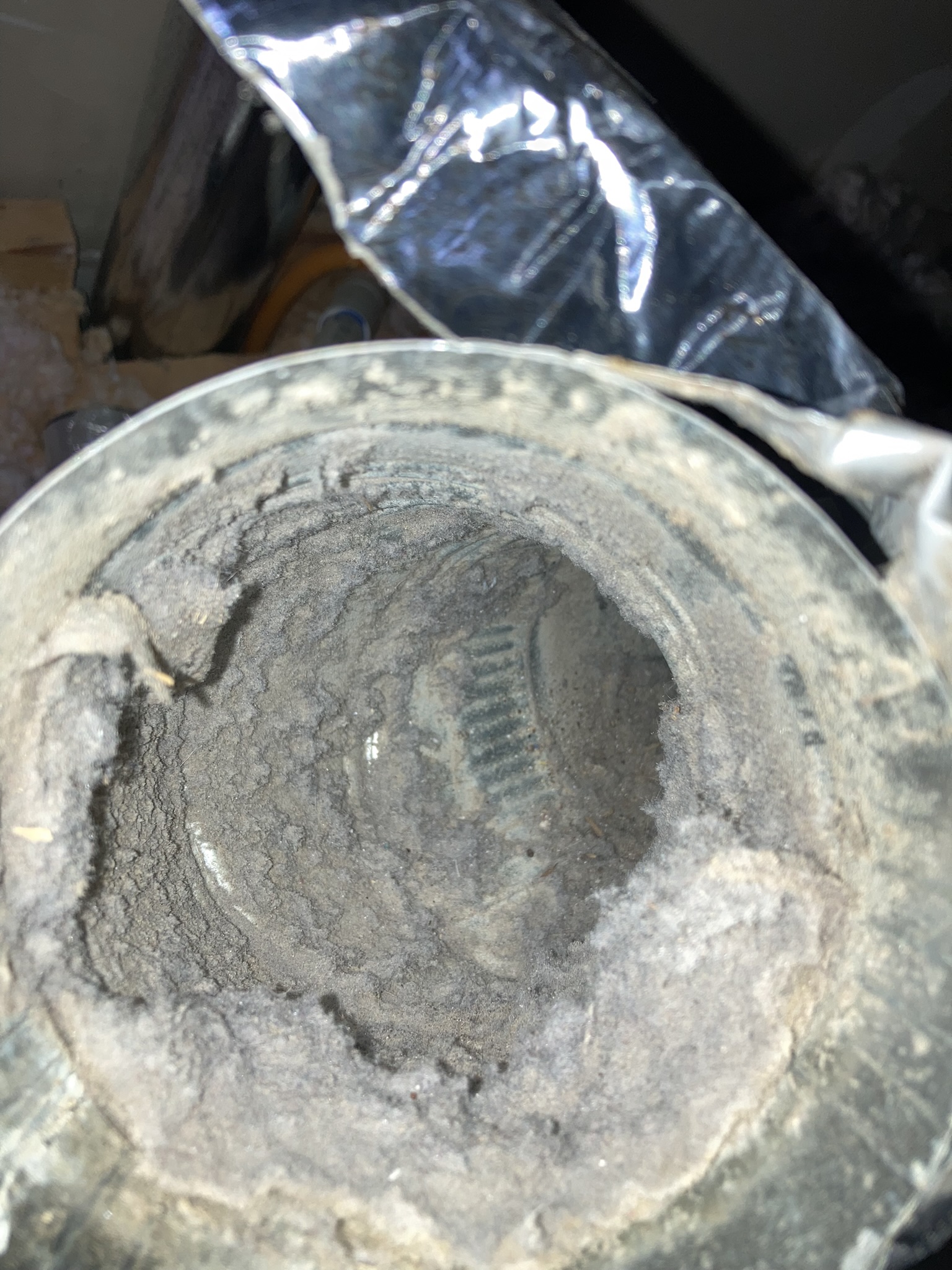

This was a easy to moderate DYI project but it took some time. If you do not feel comfortable walking around your attic or if you vent is not as accessibly as mine, I would hire a professional (see hvac cleaning for one recommendation).
 Peterkort Woods
From Warren:
Robert has provided us with a great explanation of the exhaust side of our clothes dryers and what can happen without diligent maintenance of the exhaust system. I just want to supplement that with some discussion of the supply side.
For the fan in the dryer to push wet air (and lint) out the roof it has to have an air supply. The installation instructions on my dryer specify that when installed in an alcove or closet (as mine is) it “must have two unobstructed air openings for a combined minimum total area of 72 square inches”. When I bought my unit the laundry closet had one 12″ x 8″ vent near the ceiling the louvered area of which was less than the required vent area. I added another vent the same size in the bottom of the door in front of the dryer. That does improve the efficiency of the dryer.
In Peterkort Woods we have another reason that the minimum venting specified for dryers is not adequate, even if you have a larger laundry room than mine. When Renaissance built Peterkort Woods it included a “fresh air system” intended to ventilate our relatively air-tight homes. That system is controlled by the timer located on the wall in the laundry room. When the timer turns the system on (Renaissance recommended 7 hours a day) three things happen. It turns on the ceiling ventilation fan in the laundry room, taking air out of the unit; it opens a damper in a duct to draw replacement air from the roof down to the HVAC return air duct; and it turns on the fan in the HVAC air handler to circulate that air around the home. If your ventilation system is running at the same time as your clothes dryer and your laundry room door is closed, the dryer will be starved of supply air. The ceiling fan will use most of the available air. No matter how clean your dryer vent is, it will not efficiently remove moisture and lint, which will build up in the dryer vent system. The dryer fan just isn’t strong enough to compete with the ceiling fan.
If you have a gas dryer there is even more need for a good air supply into the laundry room.
The first solution to this problem is to add a vent into your laundry room. It is an easy DYI project. Regardless of that, I recommend never running the dryer with the laundry room door shut. With the door open a few inches there should be an adequate supply of air to allow your dryer to vent, even with the ceiling fan running.
LikeLike